
 Facebook
 X
X
 Pinterest
 Copy Link
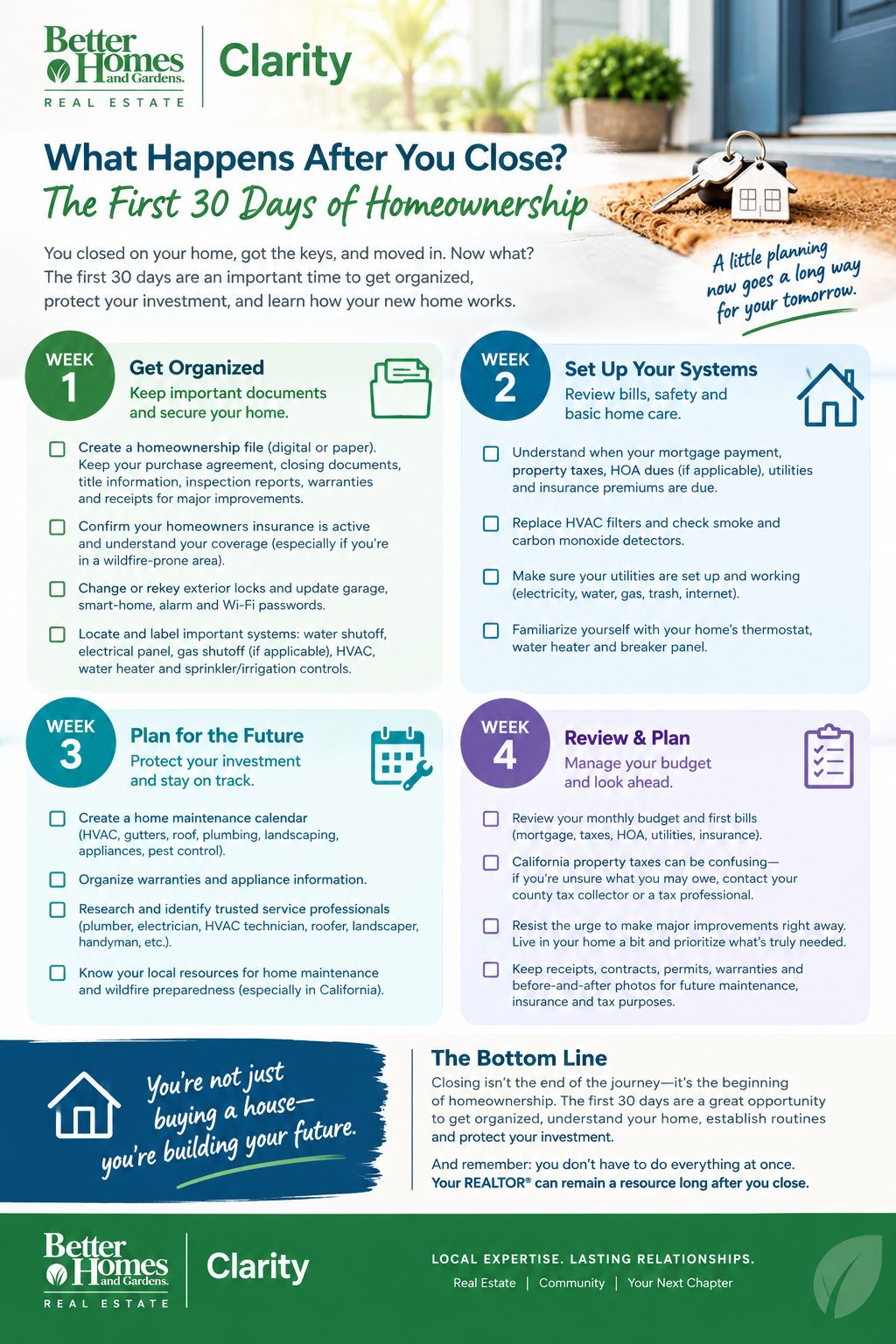
You closed on your home, got the keys, and moved in. Now what? 🏡
The first 30 days of homeownership are an important time to get organized, protect your investment, and learn how your new home works.
Here are a few things new homeowners should consider after closing.
Keep Your Closing Documents
Start by creating a homeownership file—digital, paper, or both.
Keep your purchase agreement, closing documents, title information, inspection reports, warranties, and receipts for major improvements in a safe place.
These documents may become important later when you refinance, sell the property, file an insurance claim, or need information about your home.
Confirm Your Homeowners Insurance
Make sure your homeowners insurance is active and that you understand your coverage.
If your property is in a California wildfire-prone area, pay particular attention to coverage limitations, deductibles, and wildfire-related insurance considerations.
Don’t wait until you need your policy to find out what it covers.
Change Your Locks & Review Security
You don’t necessarily know who has copies of the old keys.
Consider changing or rekeying exterior locks and updating garage, smart-home, alarm, and Wi-Fi passwords.
It’s a simple way to start fresh in your new home.
Find and Label the Important Stuff
Take a few minutes to locate:
- Main water shutoff
- Electrical panel
- Gas shutoff, if applicable
- HVAC controls and filters
- Water heater
- Sprinkler or irrigation controls
Knowing where these are before an emergency happens can save valuable time.
Set Up Your Home Maintenance Calendar
Your home is now one of your largest investments—and regular maintenance can help protect it.
Start a simple calendar for:
HVAC filters → gutters → roof → plumbing → landscaping → appliances → pest control
In Southern California, also pay attention to irrigation, drought-tolerant landscaping, seasonal weather, and wildfire-related vegetation management where applicable.
Review Your First Bills
Make sure you understand when your:
- Mortgage payment is due
- Property taxes are due
- HOA dues are due, if applicable
- Utilities need to be paid
- Insurance premiums are handled
California property taxes can be confusing for new homeowners, particularly when supplemental property tax bills are involved. If you’re unsure what you may owe, contact your county tax collector or tax professional.
Don’t Rush Into Major Improvements
It’s tempting to start remodeling immediately.
Before making major changes, spend some time living in the home. You may discover that the things you thought needed changing aren’t as important as you expected.
When you do make improvements, keep receipts, contracts, permits, warranties, and before-and-after documentation.
Those records can be useful for future maintenance, insurance, and eventually determining the property’s cost basis for tax purposes.
Build Your Homeownership Team
You don’t have to figure everything out alone.
Over time, build a trusted list of professionals such as:
- Plumber
- Electrician
- HVAC technician
- Handyman
- Landscaper
- Roofer
- Insurance professional
Your REALTOR® may also be a useful resource for finding reputable local professionals.
The Bottom Line
Closing isn’t the end of the home-buying journey—it’s the beginning of homeownership.
The first 30 days are a great opportunity to get organized, understand your home, establish maintenance routines, and protect your investment.
And remember: you don’t have to do everything at once.
A well-maintained home is built through small, consistent decisions over time.
Your REALTOR® can remain a resource even after the transaction closes. The relationship doesn’t have to end when the keys are handed over.


